


A Parent Guide to the TACHS Exam (2026)
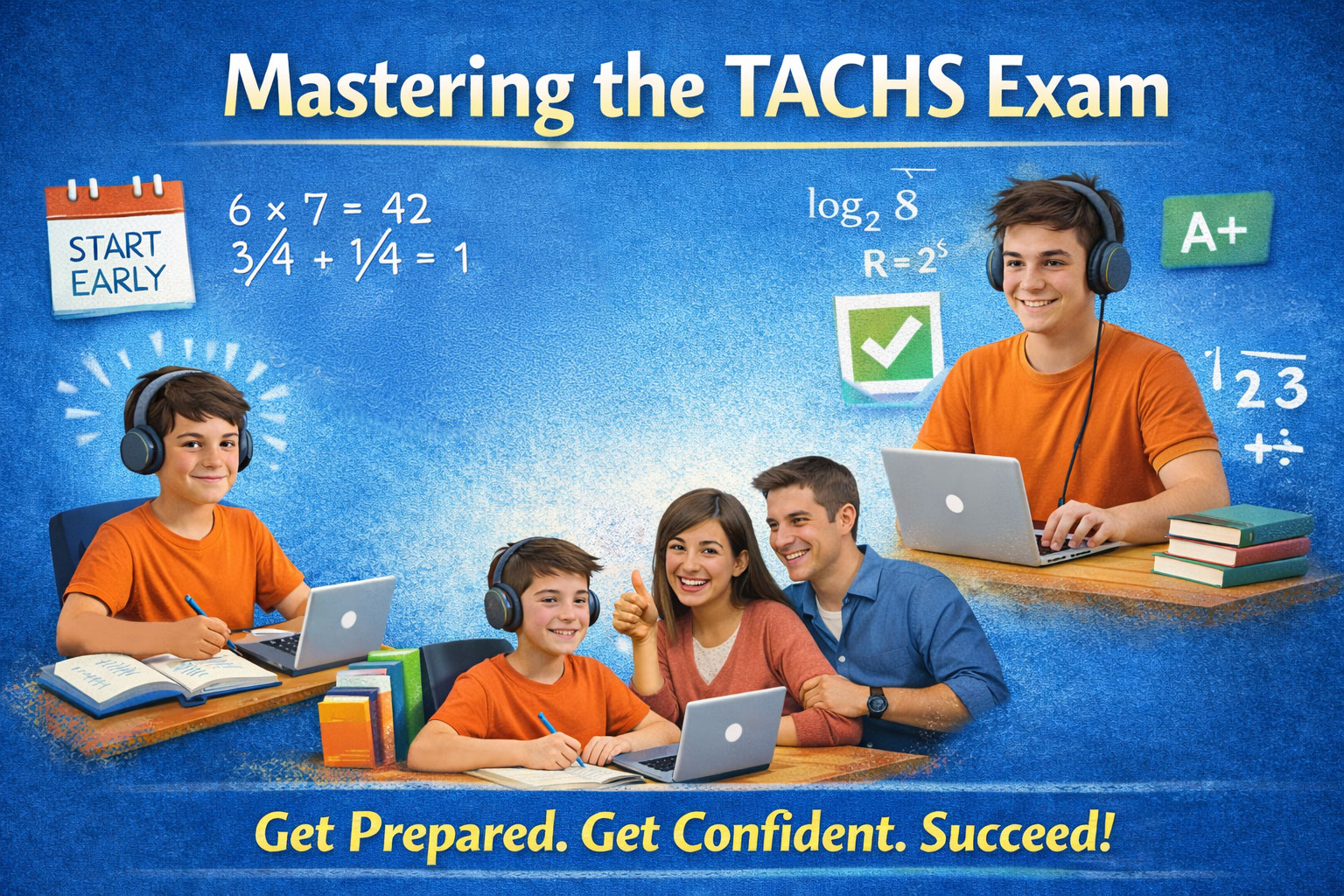
A Parent Guide to the TACHS Exam (2026)
Updated for the 2026 TACHS Exam
By Christine Carroll, Founder of Tutoring by Christine
If your child is applying to Catholic high schools in New York City, whether in Staten Island, Brooklyn, Queens, or beyond, understanding the TACHS exam is essential.
Each year, families navigating Catholic high school admissions hear conflicting information about the test. Is it harder than middle school work? When should preparation begin? How important are TACHS scores? What actually improves performance?
With over 30 years in education and nearly 15 years specializing in Catholic high school admissions test preparation, my goal is simple: to take the confusion out of the TACHS process so families can move forward with clarity, structure, and confidence.
This guide explains what the TACHS exam measures, how it is structured, and how to approach preparation strategically.
What Is the TACHS Exam?
The TACHS (Test for Admission into Catholic High Schools) is the standardized entrance exam used by Catholic high schools throughout New York City and Long Island.
Students applying to Catholic high schools in Staten Island, Brooklyn, Queens, and surrounding areas typically take the TACHS during the fall of 8th grade.
While each school makes independent admissions decisions, TACHS scores often play an important role in admissions placement and scholarship consideration. Because of this, preparation should be intentional, not rushed.
TACHS Exam Structure at a Glance
The TACHS includes:
- Six sections total
- 200 multiple-choice questions
- Approximately two hours of testing time (excluding directions)
- Administration typically occurs on the first Friday in November of the 8th grade
The TACHS is administered digitally, and students complete the exam on a computer at home under timed conditions.
The six sections are:
- Reading
- Language
- Mathematics
- Ability Section 1
- Ability Section 2
- Ability Section 3
Although the exam assesses four academic domains (Reading, Language, Mathematics, and Ability), the Ability portion is divided into three separate sections. Reasoning and analytical thinking make up a significant portion of the exam.
Each section is timed individually.
Students may not return to a previous section once time has expired.
This makes pacing and section management extremely important.
The Digital Format and At-Home Testing Environment
Because the TACHS is administered digitally and taken at home, preparation must go beyond academic content.
Students should be comfortable with:
- Reading extended passages on a screen
- Managing time without physical page flipping
- Navigating between questions within a section
- Maintaining focus in a home environment
Families should ensure:
- A quiet, distraction-free testing space
- Reliable internet access
- A fully charged device or power connection
- Familiarity with keyboard and mouse navigation
Screen stamina is a real factor. Students who are not accustomed to sustained on-screen reading may experience fatigue more quickly.
Practicing in a digital format that mirrors the actual TACHS experience helps reduce anxiety and improve performance on test day.
What the TACHS Really Measures
The TACHS aligns with middle school academic standards. It does not test advanced high school content.
However, the structure, wording, and time constraints make it rigorous.
Reading
Students analyze passages, determine main ideas, draw inferences, and interpret vocabulary within context. Strong comprehension skills and reading stamina are essential.
Language
This section evaluates grammar, usage, and sentence structure. Students must apply rules of standard written English efficiently and accurately.
Mathematics
Students apply middle school math concepts, including arithmetic, fractions, ratios, percentages, and foundational pre-algebra reasoning.
Calculators are not permitted on the TACHS math section.
Students must rely on strong number sense, mental math skills, and efficient problem-solving strategies under timed conditions.
Ability (Three Sections)
The Ability sections measure logical reasoning, pattern recognition, relationships, sequences, and analytical thinking.
Because three separate sections assess reasoning, students who prepare only academic content, without strengthening analytical thinking, often struggle.
The TACHS is structured and strategic. Preparation should be structured and strategic as well.
When Should Students Begin TACHS Preparation?
Preparation timelines depend on readiness.
Some students benefit from strengthening foundational skills in 6th or 7th grade, particularly in reading comprehension and math reasoning. Others may be ready for focused TACHS preparation in early 8th grade.
Important readiness questions include:
- Are foundational academic skills solid?
- Is reading stamina strong enough for timed passages?
- Does timing impact performance?
- Are there gaps in grammar or math fluency?
Beginning preparation without understanding readiness can lead to frustration. Beginning with a diagnostic assessment provides clarity and direction.
Common TACHS Preparation Mistakes
Families across New York City often make similar mistakes when preparing for the TACHS:
- Waiting until late 8th grade to begin
- Taking multiple practice tests without reviewing errors deeply
- Assuming strong report card grades automatically translate to strong TACHS performance
- Focusing heavily on one section while neglecting others
- Misunderstanding percentile rankings on score reports
The TACHS requires more than exposure. It requires a plan.
Structured instruction, targeted review, and consistent timed practice produce stronger results than last-minute cramming.
What Strategic TACHS Preparation Looks Like
Effective TACHS preparation includes:
- Strengthening foundational reading and math skills
- Teaching students how to approach specific question types
- Practicing under timed digital conditions
- Reviewing mistakes systematically
- Building stamina and confidence
When preparation is balanced and consistent, students improve both accuracy and efficiency.
Confidence increases when students understand not only the material but also the exam’s structure.
Frequently Asked Questions About the TACHS
How many sections are on the TACHS exam?
The TACHS is divided into six sections: Reading, Language, Mathematics, and three separate Ability sections.
How many questions are on the TACHS?
There are 200 multiple-choice questions.
When is the TACHS given?
The TACHS is typically administered on the first Friday in November of a student’s 8th-grade year.
Are calculators allowed?
No. Calculators are not permitted in the Mathematics section.
Can students return to previous sections?
No. Once the time for a section has expired, students may not return to it.
The Right First Step
Catholic high school admissions can feel overwhelming, especially when families are unsure where their child stands.
The most effective way to approach TACHS preparation is not to guess, not to cram, and not to wait.
It is to begin with clarity.
A TACHS Readiness Assessment provides objective data about:
- Academic strengths
- Skill gaps
- Timing challenges
- The most appropriate preparation pathway
With the right plan in place, preparation becomes focused, efficient, and far less stressful.
Families across New York City benefit most when preparation is intentional and structured months before the November exam date.
If your child plans to take the TACHS this fall, now is the time to determine readiness and build a clear strategy.
Strategic preparation leads to stronger performance.
And stronger performance opens doors.
Post a Comment
You must be logged in to post a comment.